The AI Corner
The SaaS Defense Playbook: How Not to Die in the AI Era
Ruben Dominguez
Apr 23, 2026
The SaaS Defense Playbook: How Not to Die in the AI Era
Source: The AI Corner · Author: Ruben Dominguez · Date: 2026-04-23 · Original article
Note: This article is paywalled. Only the introduction and a table of contents for the full guide are publicly accessible. The summary below covers the visible portion and outlines what the full piece promises.
The setup: even Salesforce got AI monetization wrong
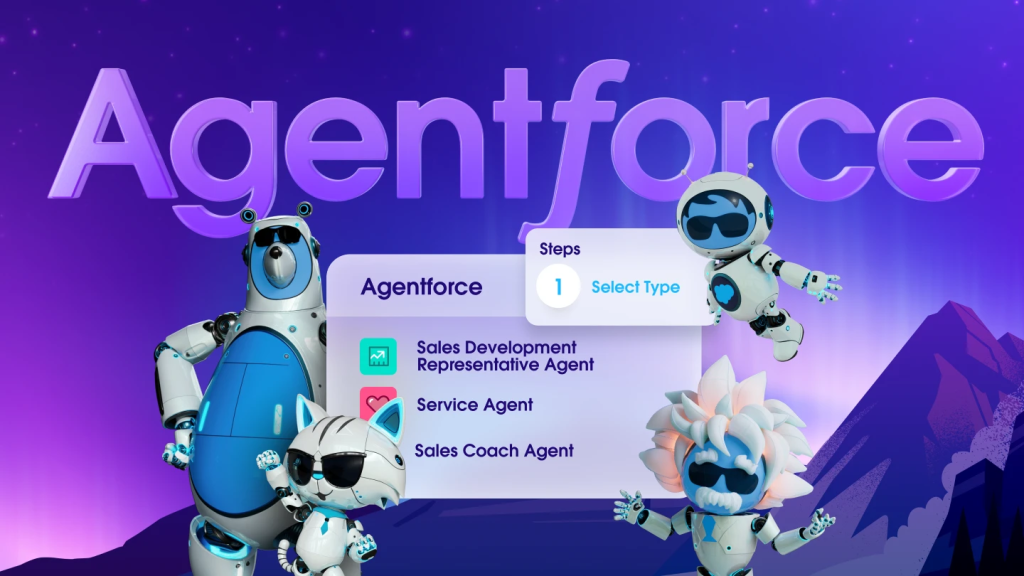
In October 2024, Marc Benioff used a Salesforce earnings call to pivot the entire company onto Agentforce — AI agents priced at $2 per conversation, designed to replace SDRs, CSMs, and customer support teams. The pitch to Wall Street wasn't "we'll sell you better software." It was bigger: Salesforce will eat the labor budget, not just the software budget. Replacing humans is a far larger market than replacing tools, and that framing is what got the stock moving.
Eight months later, Agentforce v1 was dead. Salesforce quietly relaunched it as "Flex Credits" at $0.10 per action. Procurement teams had rejected the $2-per-conversation metric across the board — buyers refused to commit to a unit they couldn't predict, audit, or cap.
The author's point isn't that Salesforce is failing. It's the most valuable pure-play SaaS business on earth. The point is the signal: if a company that big, that well-staffed, and that close to its customers had to rebuild its AI monetization from scratch within eight months of launch, then almost every smaller SaaS company is also pricing AI wrong — they just haven't been forced to admit it yet.
If Salesforce got this wrong, your company is getting it wrong too.
Three numbers that frame the next five years of SaaS
The intro grounds the stakes in three concrete data points, each pointing at a different existential threat to traditional SaaS:
-
Cursor reached $2B ARR in 24 months — faster than Wiz, Deel, or Ramp. The kicker: Cursor did it using compute sold by the same hyperscalers your gross margin already depends on. In other words, an AI-native upstart can ride your cost structure to revenue you'll never see, because the compute layer is happy to sell to whoever wins.
-
Microsoft added 15 million Copilot seats on top of its 450M-seat enterprise base. Each of those seats is a workflow — a writing assistant, a meeting summarizer, a data lookup — that someone used to buy from a standalone SaaS vendor. Microsoft isn't competing on features; it's bundling you out of the line item.
-
ServiceNow's Now Assist drove an $80B market-cap re-rating in 12 months — purely from AI attach, no acquisition. This is the optimistic case: an incumbent that successfully layered AI onto its existing platform and got rewarded for it.
Three companies, three strategies, three outcomes — and together they sketch the full strategic surface every SaaS CEO now lives on: panicked pivot (Salesforce), bundling assault (Microsoft), successful attach (ServiceNow), and disruptive native upstart (Cursor).
Why this lands for $1M–$500M ARR founders
The author addresses a specific reader: the SaaS CEO between roughly $1M and $500M ARR. The symptoms he names are the ones every founder in that band is already feeling:
- NRR is softening — net revenue retention, the metric that says "existing customers are spending more next year than this year," is drifting down. Customers aren't expanding the way they used to.
- CAC payback is stretching — it's taking longer to recoup the sales-and-marketing dollars spent acquiring a customer.
- A board member keeps forwarding the Cursor news — i.e. the pressure to "do something AI" is now coming from above, not just from product.
The unstated mental model: you're caught between an incumbent above you (Microsoft, Salesforce, ServiceNow) who can bundle, and an AI-native upstart below you (Cursor-shaped) who can grow faster than you ever did. The middle is the dangerous place to sit.
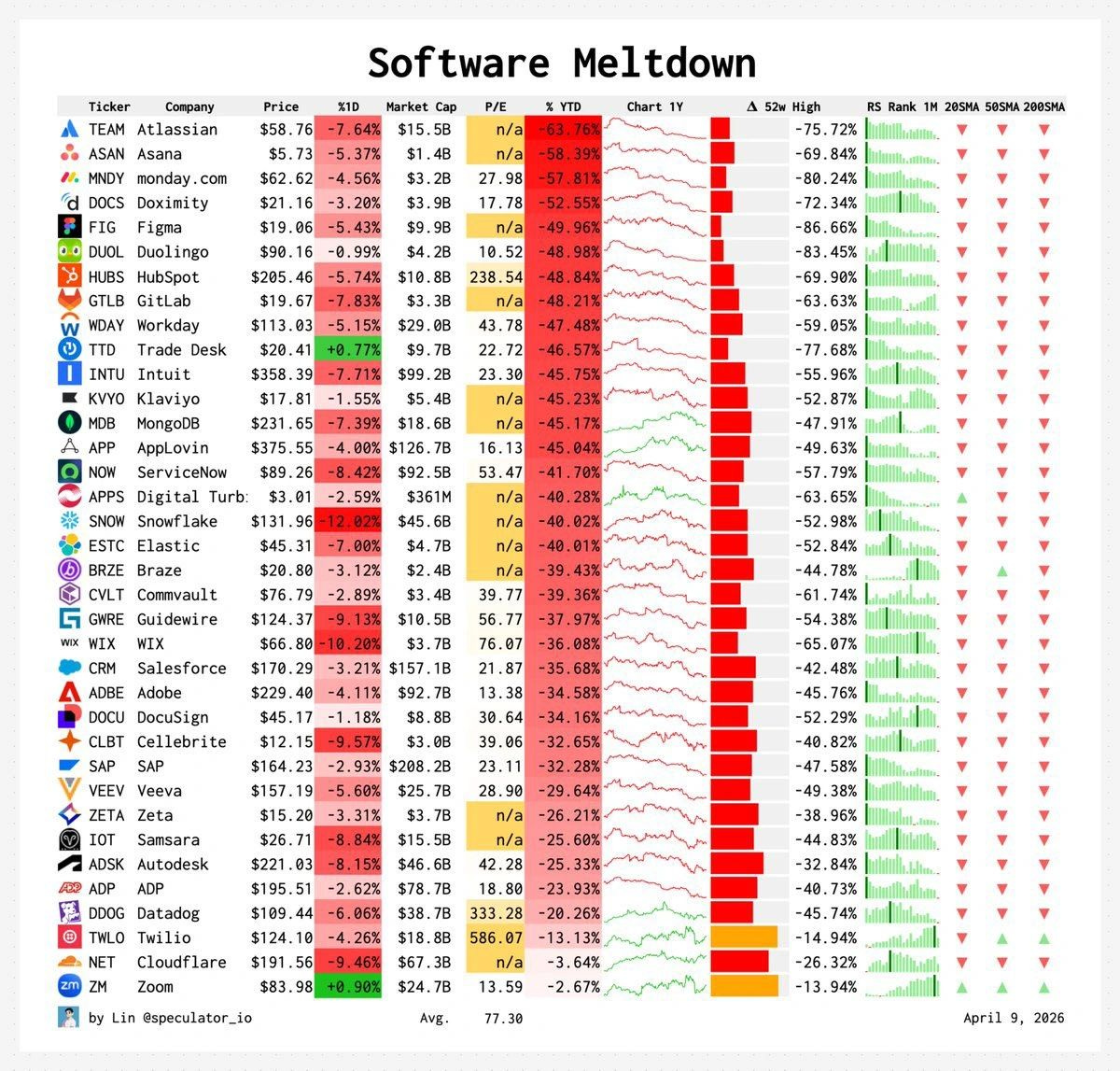
You lie awake wondering whether you are building a feature, a product, or a company.
That sentence is the emotional thesis. The "feature vs. product vs. company" question is the one a founder gets pulled into the second AI shows up: is the thing I'm building durable enough to be a company, or is it a feature an incumbent will copy and an upstart will undercut?
What the full (paywalled) playbook covers
The visible portion ends here and the rest is gated behind a paid subscription. The author lists nine sections, which together form the structure of the full argument:
-
The complete threat map — Figma vs Adobe, Zendesk's $10B take-private, the Salesforce Agentforce pivot, and what the author calls the five "kill moments" that rewrote SaaS between 2023 and 2026. (A "kill moment" being a specific event where a category's economics flipped overnight.)
-
Pricing defense — concrete templates: the Intercom Fin model (per-resolution pricing for support AI), the Sierra outcome-pricing template (charge only when the agent achieves the customer's goal), the Salesforce credits playbook (the Flex Credits structure that replaced the failed $2/conversation model), and the hybrid seat-plus-usage structure the author argues serious companies are converging on.
-
Moat construction — a five-dimension scorecard for evaluating defensibility, the three data moats that actually survive commoditization (the implied claim being that most claimed "data moats" don't), and the argument that vertical beats horizontal under $100M ARR — because vertical depth gives you proprietary data and workflow lock-in that a horizontal AI tool can't replicate cheaply.
-
The incumbent problem — how Microsoft, Salesforce, and ServiceNow bundle you out of existence, and eight plays that still work against them. The premise: you can't out-bundle a bundler, so you need asymmetric moves.
-
GTM defense — why traditional SDRs are dying (AI agents prospect cheaper and at scale), what replaces them, the Klarna walk-back (Klarna famously replaced support staff with AI, then partially reversed when quality dropped — a cautionary case), and the Shopify AI-first hiring mandate (you must justify a hire by proving an AI can't do it).
-
Product strategy — AI-wrap vs AI-native (bolting GPT onto an existing product vs. designing the product around the model from day one), the Figma AI scramble (shipping AI features under IPO-window pressure), agent-first UX patterns that survive, and the claim that evals are the most underrated moat in SaaS — because rigorous evaluation infrastructure is what lets you ship reliable AI faster than competitors.
-
Organizational defense — a new metric stack with seven board-level KPIs, shifts in the engineer-to-PM ratio (AI changes who's bottlenecked on what), and explicit guidance on what to cut vs. double down on.
-
Exit strategy — the reverse-acquihire playbook (Inflection, Character.AI, Windsurf — deals where the acquirer hires the team and licenses the tech without buying the company, leaving shareholders awkward), current M&A multiples, and the six diligence questions every AI-era acquirer asks.
-
The 90-day defensive priority stack — concrete actions for Week 1, Month 1, and Quarter 1, plus eight frameworks, checklists, and copy-paste prompts.
Takeaways from the public portion
Even without the paywalled body, the framing is clear and worth internalizing:
-
Pricing is the first front, not the last. Salesforce's pivot was forced by procurement, not by product. If your AI pricing unit isn't auditable and cappable by a buyer, it will be rejected — regardless of how elegant the value math looks in your deck.
-
The threat is two-sided. Incumbents bundle you out from above; AI-native upstarts grow past you from below using the same compute you pay for. Defensive strategy has to address both, and they require different moves.
-
Verticalize while you're small. The author's claim that vertical beats horizontal under $100M ARR is a strong, specific bet: depth in one industry produces proprietary data and workflow embedding that a horizontal AI tool can't cheaply copy.
-
Evals as moat. The idea that evaluation infrastructure — the ability to measure whether your AI output is correct, on every change — is a moat is one of the more contrarian claims teased. The intuition: in a world where everyone has access to the same models, the company that can iterate on prompts and fine-tunes with confidence ships faster and breaks less.
-
The window is closing. The repeated framing — "twelve to eighteen months before the window closes" — is the urgency lever. Whether or not the exact timeline is right, the structural point is that bundling decisions and pricing precedents being set right now will be very expensive to reverse later.
To get the actual frameworks, scorecards, and 90-day stack, the full piece requires a paid subscription (a 7-day free trial is offered).
Author
Ruben Dominguez
Continued reading
Keep your momentum
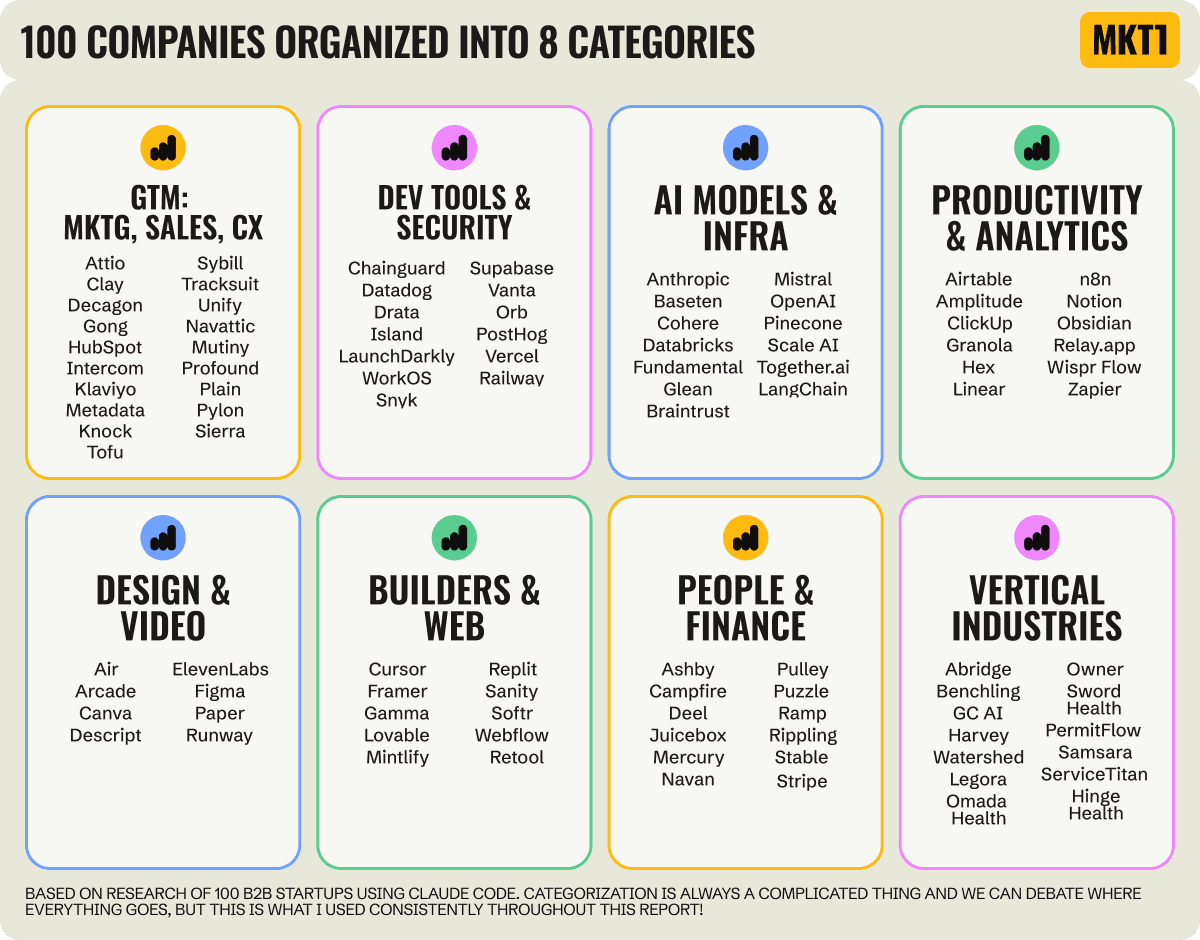
MKT1 Newsletter
100 B2B Startups, 100+ Stats, and 14 Graphs on Web, Social, and Content
This is Part 2 of MKT1's three-part State of B2B Marketing Report. Where Part 1 looked at teams and leadership , Part 2 turns to what marketing teams are actually doing — what their websites look like, how they use social, and what "content fuel" they're producing. Emily Kramer u
Apr 28 · 10m
Lenny's Newsletter (Lenny's Podcast)
Why Half of Product Managers Are in Trouble — Nikhyl Singhal on the AI Reinvention Threshold
Nikhyl Singhal is a serial founder and a former senior product executive at Meta, Google, and Credit Karma . Today he runs The Skip ( skip.show (https://skip.show)), a community for senior product leaders, plus offshoots like Skip Community , Skip Coach , and Skip.help . Lenny de
Apr 27 · 7m

The AI Corner
The AI Agent That Thinks Like Jensen Huang, Elon Musk, and Dario Amodei
Dominguez opens with a claim that is easy to skim past but worth stopping on: the difference between elite founders and everyone else is not raw IQ or speed — it is that each of them has internalized a repeatable mental procedure they run on every important decision. The procedur
Apr 27 · 6m