Lenny's Newsletter (Lenny's Podcast)
Why Half of Product Managers Are in Trouble — Nikhyl Singhal on the AI Reinvention Threshold
Lenny Rachitsky (interview with Nikhyl Singhal)
Apr 27, 2026
Why Half of Product Managers Are in Trouble — Nikhyl Singhal on the AI Reinvention Threshold
Source: Lenny's Newsletter (Lenny's Podcast) · Author: Lenny Rachitsky (interview with Nikhyl Singhal) · Date: April 19, 2026 · Original article · YouTube
⚠️ Note on completeness: The body of this newsletter is behind Lenny's paid subscriber paywall. The summary below covers everything that is publicly accessible: the framing, the discussion outline, references, and the context Lenny and Nikhyl set up before the paywall. The detailed answers to each topic live in the paid post and the podcast episode, which is freely available on YouTube, Spotify, and Apple Podcasts.
Who is Nikhyl Singhal, and why listen to him on this?
Nikhyl Singhal is a serial founder and a former senior product executive at Meta, Google, and Credit Karma. Today he runs The Skip (skip.show), a community for senior product leaders, plus offshoots like Skip Community, Skip Coach, and Skip.help. Lenny describes him as one of the most honest, unfiltered voices in product right now — someone who talks to thousands of working PMs and has visibility into hiring, layoffs, and team restructurings across the industry.
That vantage point matters: when Nikhyl says half of product managers are in trouble, it isn't a hot take from the sidelines. It's a pattern he's seeing repeat across companies that are all simultaneously trying to become "AI-first."
The core thesis
The episode is built around a stark prediction: the next two years will be the most chaotic period in product management history, and roughly half of today's PMs will not make it through unchanged. Some will be displaced. Some will reinvent themselves. The dividing line is not seniority, school, or which logos are on a resume — it's whether someone has crossed what Nikhyl calls a reinvention threshold with AI.
Two especially provocative framings anchor the conversation:
- "Smiling exhaustion." Nikhyl says he sees this expression across the product community right now: people who outwardly look fine and keep shipping, but who are quietly burning out under the cognitive load of having to relearn their craft on top of doing their day job. They smile in standups; they're exhausted underneath. Naming the pattern matters because the first step out of it is admitting it exists.
- "30,000 out, 8,000 back in — all AI-first." His prediction is that large companies will, in aggregate, shed something like 30,000 roles and rehire on the order of 8,000 — and the rehires will be people who already operate as AI-native PMs. The math is intentionally lopsided: it's not a one-for-one swap, it's a smaller, sharper org made of people who can do more with AI as a multiplier. The takeaway for an individual PM isn't "panic" — it's that the bar to be one of the 8,000 is concrete and learnable, but it's different from the bar that got people hired in the last cycle.
What the conversation covers (the public outline)
Lenny lists the questions they go deep on. Each is worth flagging because they map cleanly to decisions a working PM has to make this year:
- Why the next two years will be the most chaotic period in PM history. The "why" is the simultaneous collision of layoffs, AI tooling that genuinely changes the job, and leadership teams rewriting org charts in real time.
- Why half of current PMs are at risk, and what separates those who'll do well. The split is behavioral, not pedigreed. The people who thrive are the ones experimenting with AI in their actual workflow, not just reading about it.
- Why you need to find your "moments of joy" with AI. This is Nikhyl's antidote to AI fatigue. Instead of forcing yourself to "learn AI" as a chore, hunt for the specific moment where a tool genuinely delighted you — a doc it drafted, a prototype it built, a bug it spotted. That spark is the on-ramp; everything else follows from chasing more of those moments.
- The "smiling exhaustion" he's seeing across the product community. A diagnosis of the emotional state most PMs are actually in, and why pretending it isn't there makes reinvention harder.
- The psychological barriers that prevent people from reinventing themselves. Identity (I'm the "strategy PM," not the "builder"), sunk-cost in past expertise, and the fear of looking like a beginner again in front of peers.
- Why your resume's fancy logos matter less than ever, and what matters now. Hiring managers are weighting demonstrated AI fluency and shipped artifacts over brand pedigree. A scrappy PM with a working Lovable prototype and a Claude Code-built internal tool is starting to beat a Meta/Google logo with no hands-on AI work.
- The 30,000-out / 8,000-back-in prediction, and what the 8,000 look like in practice.
The "moments of joy" idea — why it's the most actionable takeaway
Most "you must learn AI" advice is shaped like homework: pick a course, do the reading, grind through it. Nikhyl flips it. He argues that reinvention sticks when it's pulled by genuine curiosity, not pushed by fear. The mechanism is simple:
- Use the tools on a real task you already care about (a PRD, a competitive teardown, a quick prototype).
- Notice the specific moment something feels magical — "wait, it actually built that?"
- Lean into that moment. Repeat the workflow. Tell other PMs about it.
This compounds because joy is sustainable in a way that obligation isn't. The PMs Nikhyl sees crossing the reinvention threshold are the ones who, six months in, are noticeably more energized than they were before — not less. If your AI practice is making you more tired, you're doing the assignment version, not the joy version, and you'll quit.
What "AI-first PM" actually means in this conversation
From the references and surrounding context — Claude Code, Codex, Lovable, and the Anthropic-team episode Lenny links to ("Claude is growing itself at this point") — the implied profile of an AI-first PM is concrete:
- Builds working prototypes themselves, instead of writing specs and waiting for engineering.
- Treats AI as a teammate in the loop, not a search engine — drafts strategy memos, generates user-research synthesis, runs analyses.
- Ships internal tooling (dashboards, eval harnesses, ops automations) without filing a ticket.
- Has an opinion on model behavior and evals, not just on UX and roadmap.
The "four jobs" tweet Nikhyl references (yrechtman post) is the cultural backdrop: a view that in an AI-native company, the surviving roles collapse to a small set, and PMs need to be unambiguously one of them — typically the person who decides what to build and can also help build it.
What the resume signal looks like now
Nikhyl's claim that fancy logos matter less is paired with what does matter:
- Artifacts you can show, not roles you can list. Working demos beat job titles.
- Specificity about your AI workflow. Hiring managers want to hear "here's the eval set I built, here's the agent loop I designed," not "I used ChatGPT for research."
- A reinvention story. Evidence that you've already retooled yourself once is itself a hiring signal, because companies are betting on people who can keep doing it.
The references, and what they tell you about the worldview
The reference list is worth scanning as a reading/watching syllabus implied by the episode:
- Industry context: State of the product job market in early 2026, An AI state of the union with Simon Willison, Hard truths about building in the AI era — Keith Rabois.
- AI-native product orgs in practice: Anthropic's $1B → $19B growth run with Amol Avasare, How Anthropic's product team moves faster than anyone else — Cat Wu.
- Tools mentioned: Claude Code, Codex, Lovable.
- Career long view: Nikhyl's earlier episode, Building a long and meaningful career, is the philosophical prequel — reinvention is presented as a recurring career skill, not a one-time AI-era event.
- The COBOL nod. The reference to COBOL is almost certainly a cautionary analogy: skills can persist long after the world moves on, but the people who only have those skills do not enjoy the same persistence. Don't be the COBOL PM.
- Books: James (Percival Everett) and Adventures of Huckleberry Finn. The pairing is itself a reinvention metaphor — same story, told from a perspective that wasn't centered before.
How a working PM should read this
If you're a PM right now, the practical synthesis from the publicly available portion of the episode is:
- Assume the chaos is real and personal. Don't wait for your company to formalize an AI-first restructuring before you start changing how you work.
- Audit your week for "smiling exhaustion." If you're shipping but quietly fried, that's a signal you're carrying invisible reinvention debt.
- Find one moment of joy with AI this week. A real task, a real tool, a real spark. Build from that, not from a curriculum.
- Replace one "I'll spec this and hand it off" with "I'll build a prototype tonight." The artifact is the resume now.
- Stop leaning on logos. Lead with what you've shipped using AI, including small internal things. That's what the 8,000 rehires will look like.
The deeper, named-names, story-driven version of all of this — including the personal reinvention stories, the specific PM archetypes Nikhyl thinks are most at risk, and his "biggest takeaways" wrap-up — is in the paid post and the full audio/video episode.
Author
Lenny Rachitsky (interview with Nikhyl Singhal)
Continued reading
Keep your momentum
MKT1 Newsletter
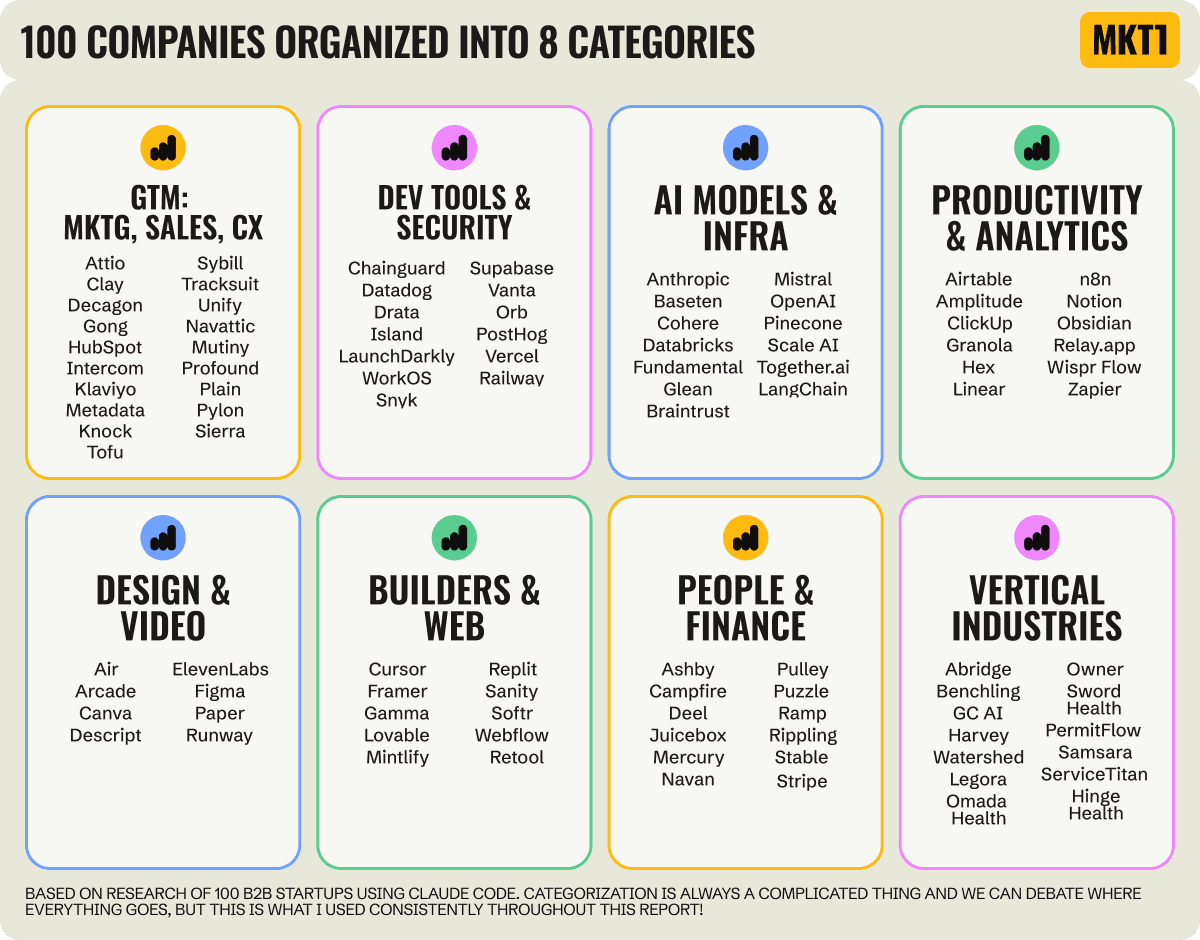
100 B2B Startups, 100+ Stats, and 14 Graphs on Web, Social, and Content
This is Part 2 of MKT1's three-part State of B2B Marketing Report. Where Part 1 looked at teams and leadership , Part 2 turns to what marketing teams are actually doing — what their websites look like, how they use social, and what "content fuel" they're producing. Emily Kramer u
Apr 28 · 10m

Simon Willison's Newsletter
Qwen3.6‑35B‑A3B on my laptop drew me a better pelican than Claude Opus 4.7
Two big model releases dropped on the same morning: Qwen3.6‑35B‑A3B from Alibaba (an open‑weights model) and Claude Opus 4.7 from Anthropic (a closed, frontier proprietary model). Simon ran his long‑running joke benchmark — "Generate an SVG of a pelican riding a bicycle" — on bot
Apr 27 · 11m
The AI Corner
The AI Agent That Thinks Like Jensen Huang, Elon Musk, and Dario Amodei
Dominguez opens with a claim that is easy to skim past but worth stopping on: the difference between elite founders and everyone else is not raw IQ or speed — it is that each of them has internalized a repeatable mental procedure they run on every important decision. The procedur
Apr 27 · 6m