A Life Engineered
The 3 Candidates I Always Rejected as a Bar Raiser at Amazon
Steve Huynh (ex-Amazon Principal Engineer)
Apr 22, 2026
The 3 Candidates I Always Rejected as a Bar Raiser at Amazon
Source: A Life Engineered · Author: Steve Huynh (ex-Amazon Principal Engineer) · Date: Apr 22, 2026 · Original article

The story that explains the whole system
In Amazon's early days, Jeff Bezos personally referred someone for a senior leadership role. The team interviewed the candidate, decided he didn't clear the bar, and now had to break the news to Jeff. Anticipating pushback, they prepared a six-page memo with every interview signal, every data point, and the full reasoning. Before he had even read it, Jeff said: "Okay."
That story is told to every new Bar Raiser during training, and once you understand why, the rest of Amazon's hiring system makes sense. Jeff deliberately designed the Bar Raiser program so that the hiring decision could not be bent — not by a hiring manager desperate for headcount, not by a hot resume, not even by the founder's personal referral.
What a Bar Raiser actually is
A Bar Raiser is a trained interviewer pulled in from outside the hiring team. They have:
- No stake in filling the role (they don't report to the manager and don't need the headcount).
- Veto power over the offer.
- One central job: ensure every hire they sign off on will be better than 50% of the people already doing that job at that level — the "raises the bar" rule.
- A secondary job: make sure the loop is run honestly, with nobody cutting corners or trying to push a weak fit through.
The bar doesn't know your resume, doesn't care who referred you, and doesn't care how badly the team needs the seat filled.
Steve ran close to 1,000 interviews over nearly 20 years at Amazon, a large chunk as a Bar Raiser. The Bar Raiser interview itself isn't harder than any other loop — there's no secret vault of questions. But after enough loops, you see that the candidates who don't get offers fail in the same handful of ways. Below are the three clusters he rejected every single time.
1. The candidate who only prepared for half the interview
This person was technically excellent. They crushed coding. Their system design was sharp. They asked good architecture questions and pushed back thoughtfully when challenged.
Then the behavioral round started, and it was like talking to a different human being:
"Tell me about a time you took a risk that didn't pay off." "Hmm. I don't really take risks at work, I write software."
"Tell me about a time you disagreed with a manager." "I've never really had a disagreement at work."
Those answers are surprisingly common, and almost never true. Put a bunch of smart, opinionated people in a room and ask them to ship something hard, and disagreements happen. Real projects involve real risks, and some of those risks fail. If a candidate can't surface a single such moment from an entire career, only two explanations are plausible: either they weren't paying attention, or they weren't in the room when the real decisions were made. Neither is a good signal.
You could see what had happened. They'd spent weeks — sometimes months — on LeetCode and system design primers, walking in believing this was a technical interview with a couple of "softball" behavioral questions tacked on. They'd put zero time into the part of the interview that would actually decide the outcome.
Why this is a fatal misread of Amazon
Steve says the same thing every time he ran new-hire interview training: at Amazon, when someone gets fired, it's almost always for behavioral reasons, not technical ones.
Software is a team sport. The interview has to demonstrate that you'd work well with the people already there, that you'd make good judgment calls when nobody's watching, and that you'd take ownership when things go wrong instead of pointing at others. Candidates who can't show that are the ones who wash out twelve months in.
That flips the importance ranking most candidates assume:
- The behavioral round predicts, more accurately than any other round, whether you'll still be at the company in two years.
- Hiring a technically strong candidate who bombs the behavioral is the worst kind of hire — they pass on the skills that rarely get people fired and fail on the skills that usually do.
No Bar Raiser will approve that trade, no matter how cleanly the candidate codes.
2. The candidate who told me what they thought I wanted to hear
The opposite problem. This candidate had prepared hard for the behavioral round — read up on Amazon's Leadership Principles (most other companies call these "values" or "competencies"), studied the public list, and walked in ready to attach a principle to every story.
You could tell because they'd name the principle out loud:
"Tell me about a time you took on something outside your scope." "Sure. So this is a great example of Bias for Action. My manager asked me to lead the migration of our service to the new platform. I put together a project plan, ran weekly check-ins, and we shipped on time."
Listen to what the story actually describes. Their manager asked them to do something. They made a plan. They had meetings. They finished on schedule. Every action in that story was reactive. No moment of initiative, no decision made without permission, no risk taken, nothing a less proactive person in the same seat wouldn't also have done.
The candidate labeled it Bias for Action. What they described was following instructions on time.
Why this fails
The candidate assumed the label was the point. It isn't. Interviewers aren't sitting there with a checklist waiting for the magic words. When Steve ran a loop, he had two or three Leadership Principles he was specifically responsible for probing — he knew which ones, the candidate didn't. But he wasn't listening for the name of the principle. He was listening for the specific behaviors inside the story that proved the trait was actually present.
A Bar Raiser's job is to cut through performance and find signal. When the performance (correct vocabulary, smooth labeling) is louder than the signal (real evidence of the trait), that's a fail. The candidate had spent their prep time learning the vocabulary of the rubric instead of mining their own career for stories that would demonstrate the traits without needing a label.
3. The one-story wonder
This is the cluster Steve had the most sympathy for, because these candidates had genuinely done something impressive — shipped a product now used by millions, or rebuilt a system that had been breaking weekly for years. The accomplishment was real. It was a credible answer to a lot of different behavioral questions.
So they leaned on it. Heavily. Too heavily.
Here's how the loop unfolds from the interviewer's seat:
- Question 1: They tell the story. You think, this candidate is really strong.
- Question 2: A variation of the same story, pulled out to highlight a different trait. Strong candidates often have one accomplishment that shows several traits, so this doesn't yet raise a flag.
- Question 3: Same story, different beat. You explicitly prompt for a different example so you can move on. They try, the new example doesn't land, and they drift back to the marquee story.
Then the loop debriefs, and the other interviewers say the same thing: they all heard a version of the same story attached to whatever question they asked.
The guitarist analogy
It's like a guitarist who plays the same song every time you ask them to play. They might play it well, but by the fourth time through you stop wondering whether they're a great guitarist and start wondering whether they actually know how to play or whether they've just memorized one song. You can't tell whether the candidate has a pattern of strong behavior across their career, or whether they had one excellent moment and have been riffing on it ever since.
This matters because each interviewer in the loop is probing different competencies and they compare notes in the debrief. When three interviewers come back with the same story attached to three different traits, the story starts working against the candidate. The loop was trying to assess a pattern across a career; instead it found one moment, recycled.
A candidate who walks in with several stories — even if some are noticeably less impressive than their marquee one — will always beat a candidate with one great story told six times.
A single example, no matter how good, can't predict how you'll behave once you're hired.
What to do about it
None of these three candidates was unqualified. All had done real work. They lost the offer because they prepared for the wrong thing, prepared in the wrong way, or didn't go deep enough. All three are fixable.
If you only prepared for half the interview: Aim for roughly a 75/25 split between technical and behavioral prep — yes, that feels lopsided after months of LeetCode. The math: technical prep hits diminishing returns fast; another 10 problems won't move the needle. But an hour of behavioral prep, when you've done zero, is pure upside. It's the highest-leverage prep you can do, because the behavioral round is the one most likely to torpedo your offer.
If you memorized the Leadership Principles: Stop looking at your stories through the lens of the competency and start looking at them through the lens of your actions. For each story, write down the specific things you did. Then match those actions to a competency — not the setup or the outcome. Interviewers are listening for what you did. If your actions don't actually demonstrate the trait, slapping the right label on the story won't save it.
If you're the one-story wonder: Mine your career for more material than you think you have. This is harder than it sounds, because the stories that make the best interview examples are often the ones you've stopped thinking of as noteworthy. Build a deeper bank so you're never reaching for the same song.
The closing point
The Bar Raiser program works because the bar is the same regardless of how you got into the room. The bad news is that even Jeff Bezos's personal referral couldn't bend it. The good news cuts the same way: you don't need a referral, a pedigree, or a friend on the team. You just need to show the loop what it would actually be like to work with you — across multiple stories, with concrete actions, on both the technical and the behavioral side.
(The post ends with a plug for Steve's book "Technical Behavioral Interview: An Insider's Guide," which expands on these ideas with prompts for surfacing forgotten stories and a framework for building varied, non-overlapping examples.)
Author
Steve Huynh (ex-Amazon Principal Engineer)
Continued reading
Keep your momentum
MKT1 Newsletter
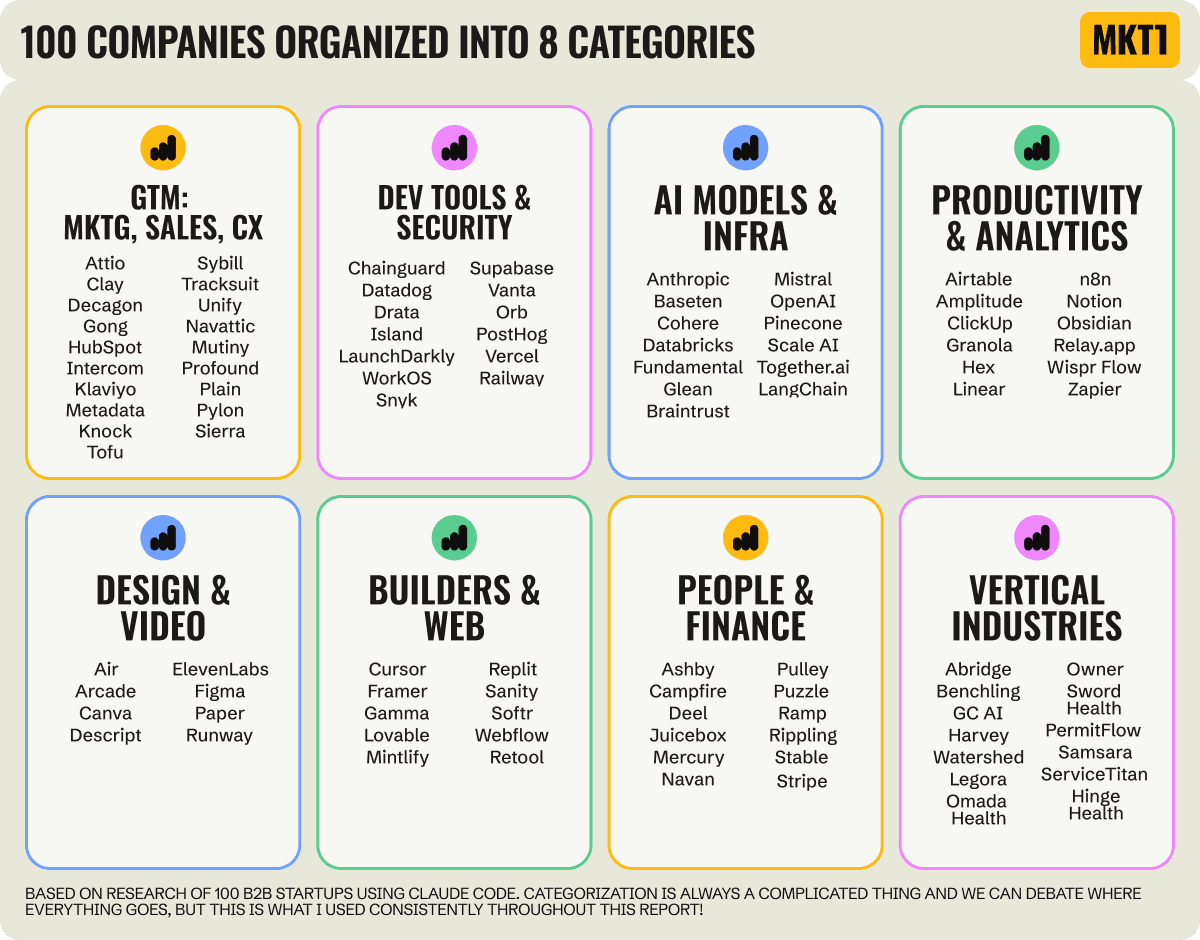
100 B2B Startups, 100+ Stats, and 14 Graphs on Web, Social, and Content
This is Part 2 of MKT1's three-part State of B2B Marketing Report. Where Part 1 looked at teams and leadership , Part 2 turns to what marketing teams are actually doing — what their websites look like, how they use social, and what "content fuel" they're producing. Emily Kramer u
Apr 28 · 10m
Lenny's Newsletter (Lenny's Podcast)
Why Half of Product Managers Are in Trouble — Nikhyl Singhal on the AI Reinvention Threshold
Nikhyl Singhal is a serial founder and a former senior product executive at Meta, Google, and Credit Karma . Today he runs The Skip ( skip.show (https://skip.show)), a community for senior product leaders, plus offshoots like Skip Community , Skip Coach , and Skip.help . Lenny de
Apr 27 · 7m

The AI Corner
The AI Agent That Thinks Like Jensen Huang, Elon Musk, and Dario Amodei
Dominguez opens with a claim that is easy to skim past but worth stopping on: the difference between elite founders and everyone else is not raw IQ or speed — it is that each of them has internalized a repeatable mental procedure they run on every important decision. The procedur
Apr 27 · 6m